
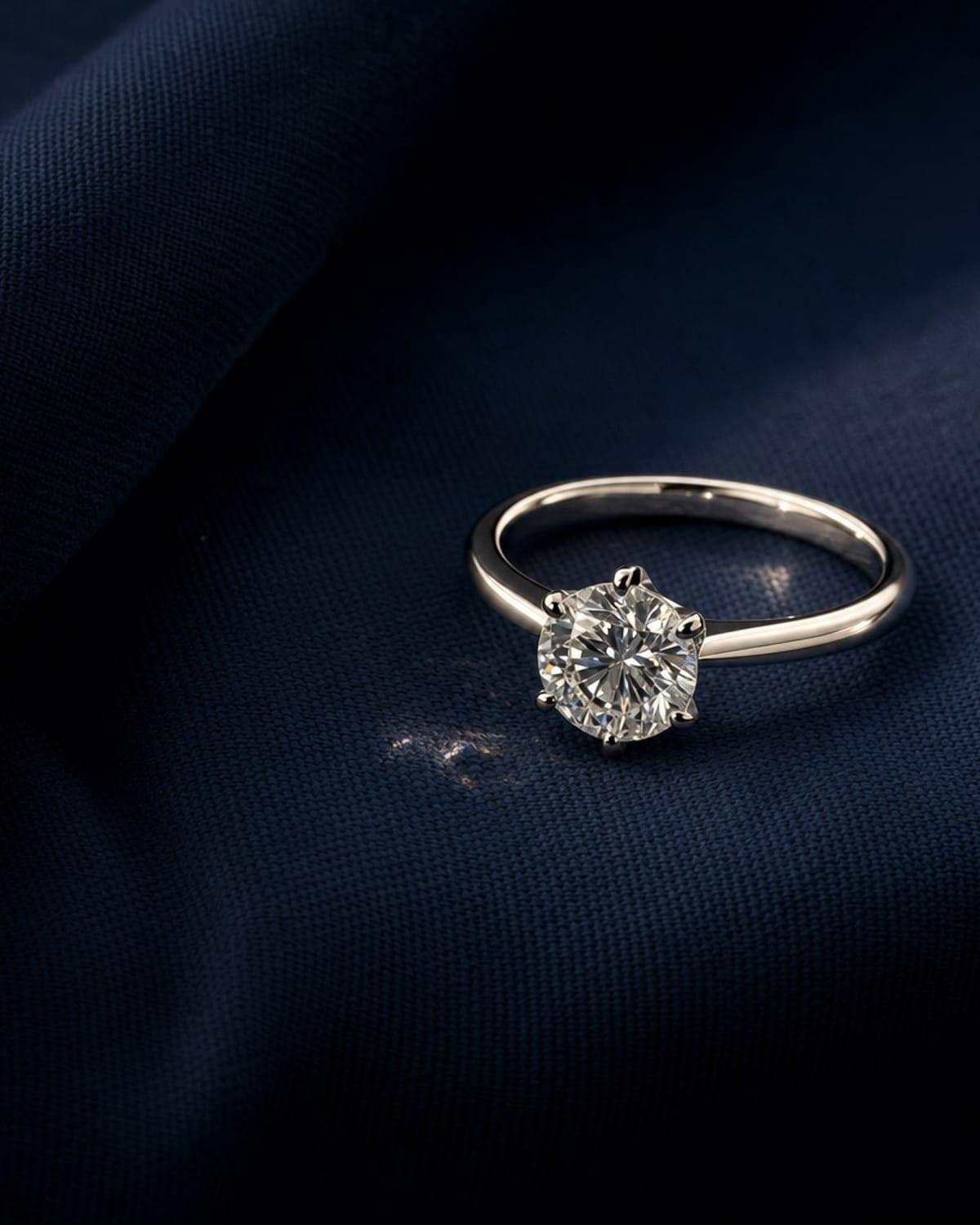
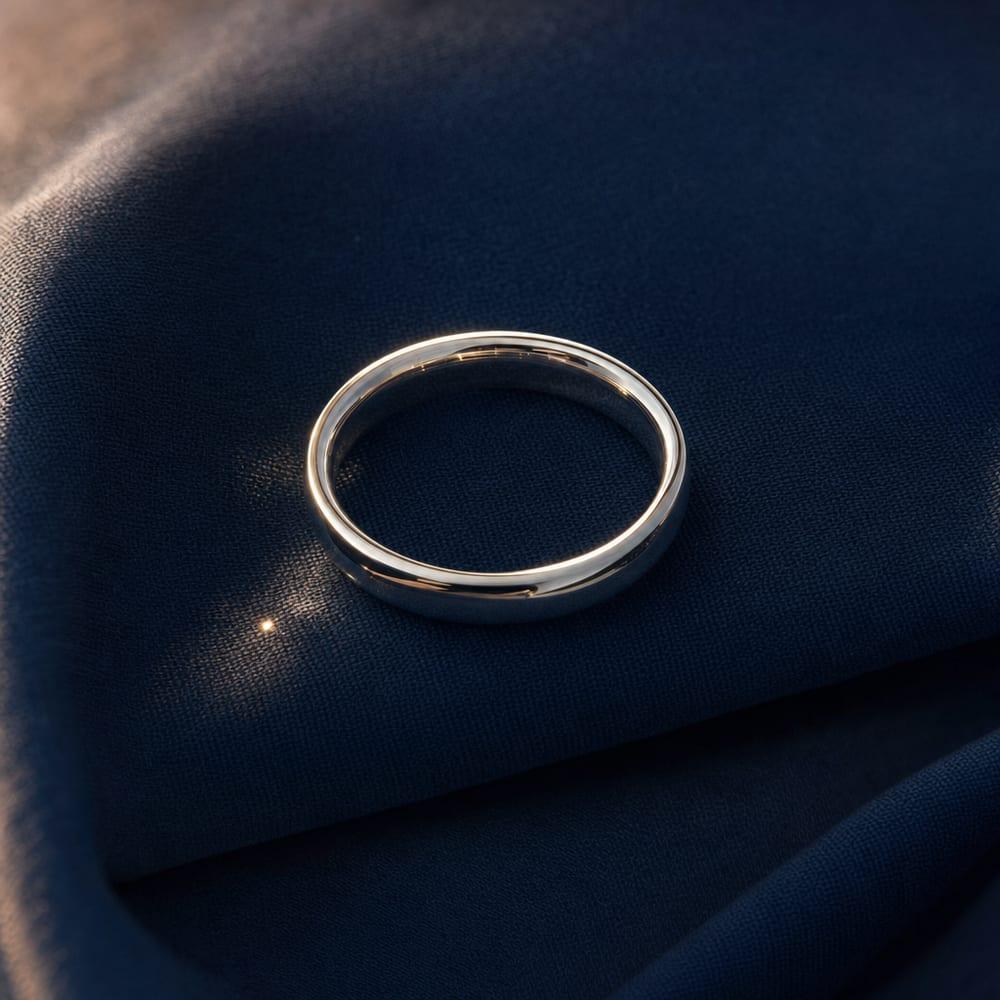
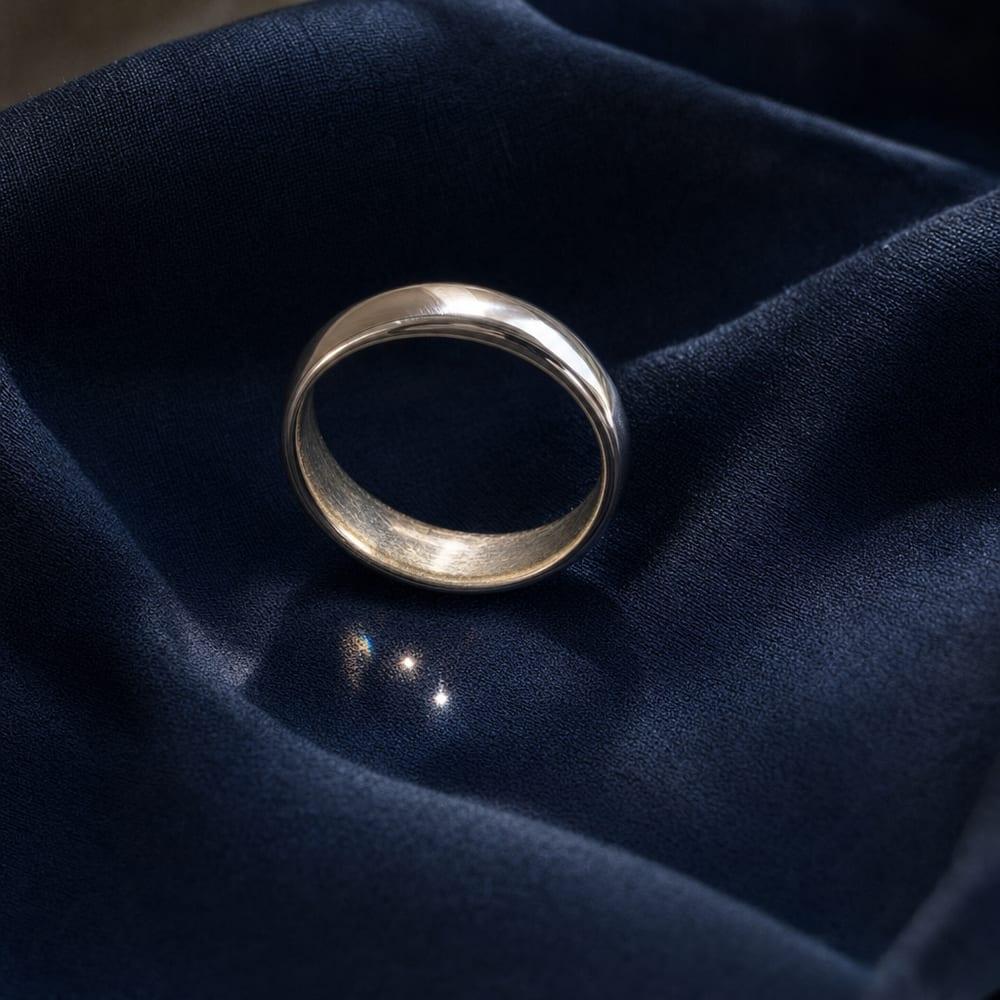
White gold is yellow gold alloyed with white metals, then plated with rhodium for its bright white finish. That plating wears off over time, which is the one thing every white gold buyer should know before they choose it. At Savoir-Faire Jewellery we make white gold rings in 9ct, 14ct and 18ct in our Melbourne workshop. This guide covers what white gold really is, what owning it involves, and when to choose it.
It goes deeper on one metal than our gold vs platinum guide, which compares all four.
What is white gold made of?
There is no such thing as naturally white gold. Pure gold is yellow, so white gold starts as pure gold melted with white metals that bleach its colour. The finished ring is then electroplated with rhodium, a bright, hard metal from the platinum family, which gives it the mirror-white finish you see in a showroom.
| White gold | Pure gold | Hallmark | Notes |
|---|---|---|---|
| 18ct | 75% | 750 | The most gold; softest of the three |
| 14ct | 58.5% | 585 | About 10% harder than 18ct; costs less |
| 9ct | 37.5% | 375 | The lowest price |
Underneath the rhodium, white gold is a pale, slightly warm grey. That is the colour that shows through when the plating wears, and it is why white gold always comes with a maintenance schedule.
The white metals in the alloy matter too. Quality Australian white gold is commonly made with nickel-free, palladium-based alloys. Some cheaper imports still use nickel, the most common cause of jewellery skin reactions. If you have sensitive skin, ask what the alloy is before you buy, wherever you buy.
Does white gold turn yellow?
White gold doesn't change colour; its plating wears away and reveals the warmer metal underneath. The first sign is a slight dulling of the shine. Then a yellowish or grey tone appears, usually first on the underside of the band and behind the claws, where the ring rubs most.
This isn't a fault, and it isn't a sign of poor-quality gold. Every white gold ring does it, at every jeweller. Some things speed it up: chlorinated pools, saltwater, manual work and harsh cleaning chemicals. Taking your ring off for the pool and the gym is the easiest way to make the plating last.
How often does white gold need re-plating?
A white gold ring worn every day needs re-plating roughly every 12 to 18 months. Earrings and pendants, which see far less friction, last two to three years. In Australia, re-plating typically costs about $60-$225 a visit, most often $100-$200.
Put those numbers together and the real cost becomes clear: over ten years, a daily-worn white gold ring will need somewhere around six to ten re-plates. That is the fair way to compare white gold with platinum, which never needs plating at all.
Re-plating is a routine workshop job: the ring is cleaned and polished, then given a fresh coat of rhodium. It is also a good moment for a claw check. A daily-worn engagement ring's claws are worth checking every three to six months anyway, and doing both at once saves a trip. Our jewellery care guide covers the rest.
18ct vs 14ct white gold: which is better?
Neither is better; 14ct is harder and cheaper, 18ct carries more gold. 14ct is about 10% harder than 18ct, which you notice over years of daily wear, so it suits hands-on work and an active life. It also has less yellow gold in the mix, so when its plating wears, the tone underneath shows less warmth than 18ct.
18ct is 75% pure gold and feels a little more substantial. But there is a catch at Savoir-Faire: platinum costs the same as 18ct white gold. If you are leaning towards 18ct white gold, look at platinum before you decide, because it is naturally white and never needs re-plating.
- Choose 14ct white gold for daily wear on a tighter budget.
- Choose platinum instead of 18ct white gold if you want white metal with no upkeep, at the same price.
- Choose 18ct white gold if you want a lighter ring than platinum with the most gold content.
Is white gold or platinum better for an engagement ring?
For most couples, platinum, because it never needs re-plating and wears better over decades. At Savoir-Faire it costs the same as 18ct white gold, so price is no longer the deciding factor. White gold still makes sense if you prefer a lighter ring, or if 14ct white gold fits the budget better. Our platinum vs white gold guide compares the two side by side, including total cost over ten years.
What does white gold cost?
For engagement rings, our 18ct white gold settings cost slightly more than 18ct yellow gold, because of the rhodium finishing, and platinum costs the same as 18ct white gold. 14ct and 9ct settings cost less. So at Savoir-Faire, the budget route to a white ring is 14ct white gold, not 18ct.
Wedding bands are simpler: yellow, white and rose gold cost the same at the same purity, and platinum bands cost the same as 18ct. Whatever you choose, add re-plating to the long-term cost of a white gold ring.
Browse white gold engagement rings, or women's white gold wedding rings and men's white gold wedding bands. If you want to match a band to your engagement ring, match the metal: a harder ring slowly wears down a softer one where they rub.
Common questions
Is white gold real gold?
Yes. 18ct white gold is 75% pure gold and 14ct is 58.5%. The white colour comes from the white metals it's alloyed with and a rhodium plating on the surface, not from a different metal.
How much does it cost to re-plate white gold?
In Australia, re-plating typically costs about $60-$225 a visit, most often $100-$200. A ring worn every day needs it roughly every 12 to 18 months.
Is white gold OK for sensitive skin?
Usually. Quality Australian white gold is commonly made with nickel-free, palladium-based alloys. The more common issue is the plating wearing through to the alloy beneath. If you have a confirmed metal allergy, platinum is the safer choice.
Does white gold scratch easily?
The rhodium surface is hard, but it wears away over time. Underneath, gold loses a tiny amount of metal each time it's scratched or polished, so a white gold ring thins very slowly over decades.
Is white gold cheaper than platinum?
At Savoir-Faire Jewellery, 18ct white gold and platinum cost the same. 14ct and 9ct white gold cost less. Elsewhere, platinum is often priced higher, so compare finished-ring prices rather than assuming.
White gold is a good choice when you go in knowing it needs looking after. See the finished designs in our white gold engagement rings, compare them with platinum engagement rings, or book a free consultation in Melbourne or by video to see both side by side.