
A lab-grown diamond is a real diamond — crystallised carbon with the same hardness, fire and brilliance as one pulled from the ground — grown in a laboratory over a few weeks rather than formed deep in the earth over billions of years. At Savoir-Faire Jewellery, our Melbourne designer-led atelier, it is the stone we most often recommend: optically and chemically identical to a mined diamond, independently certified, and typically a fraction of the price for the same size and quality. We sell both, and natural diamonds remain a lovely choice — but for most couples, lab-grown is where the budget stretches furthest. This guide covers what lab-grown diamonds actually are, how they are made, how to read a certificate (which changed a great deal in late 2025), what they cost and resell for in 2026, and the honest ethical picture.
A real diamond, not a diamond "simulant"
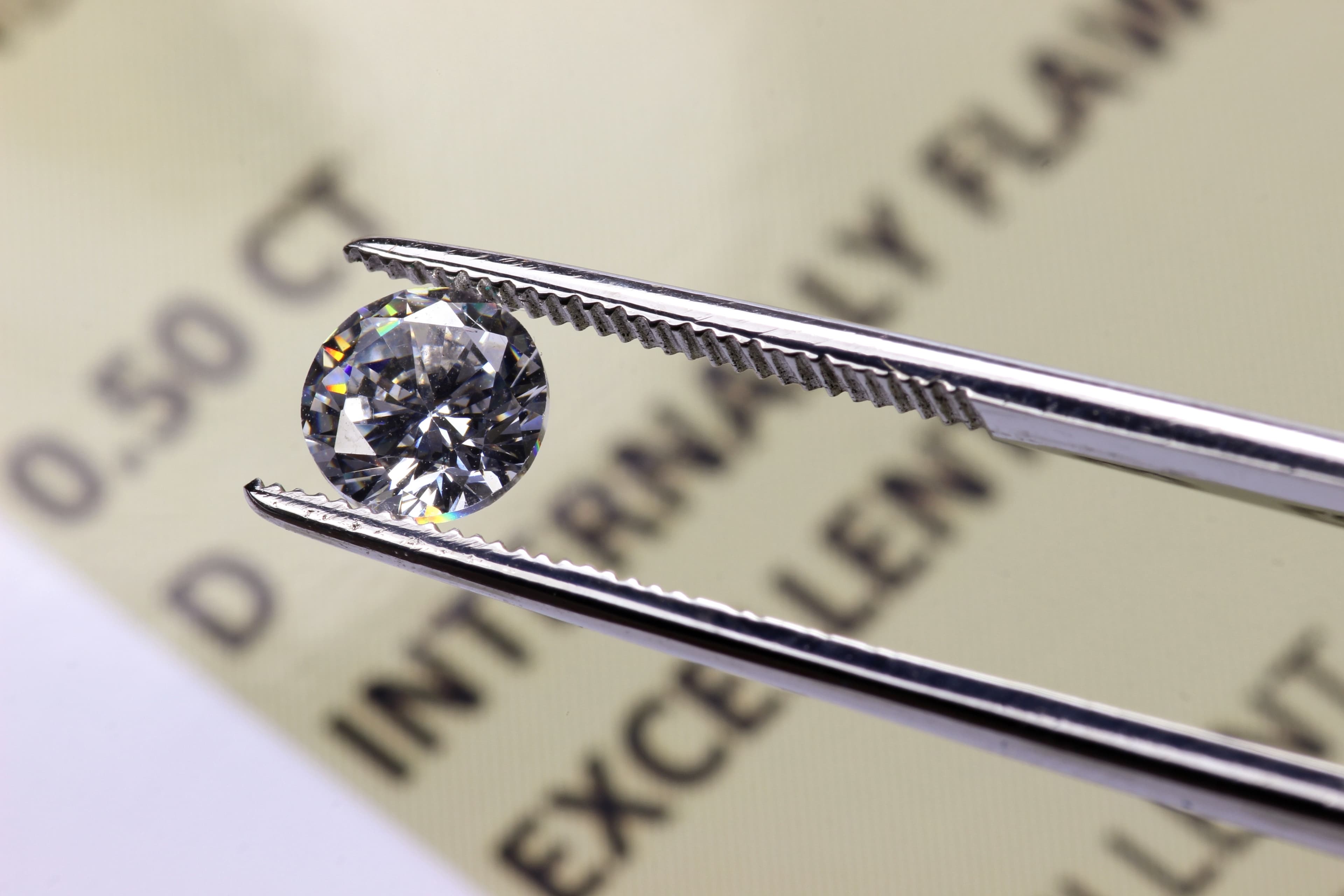
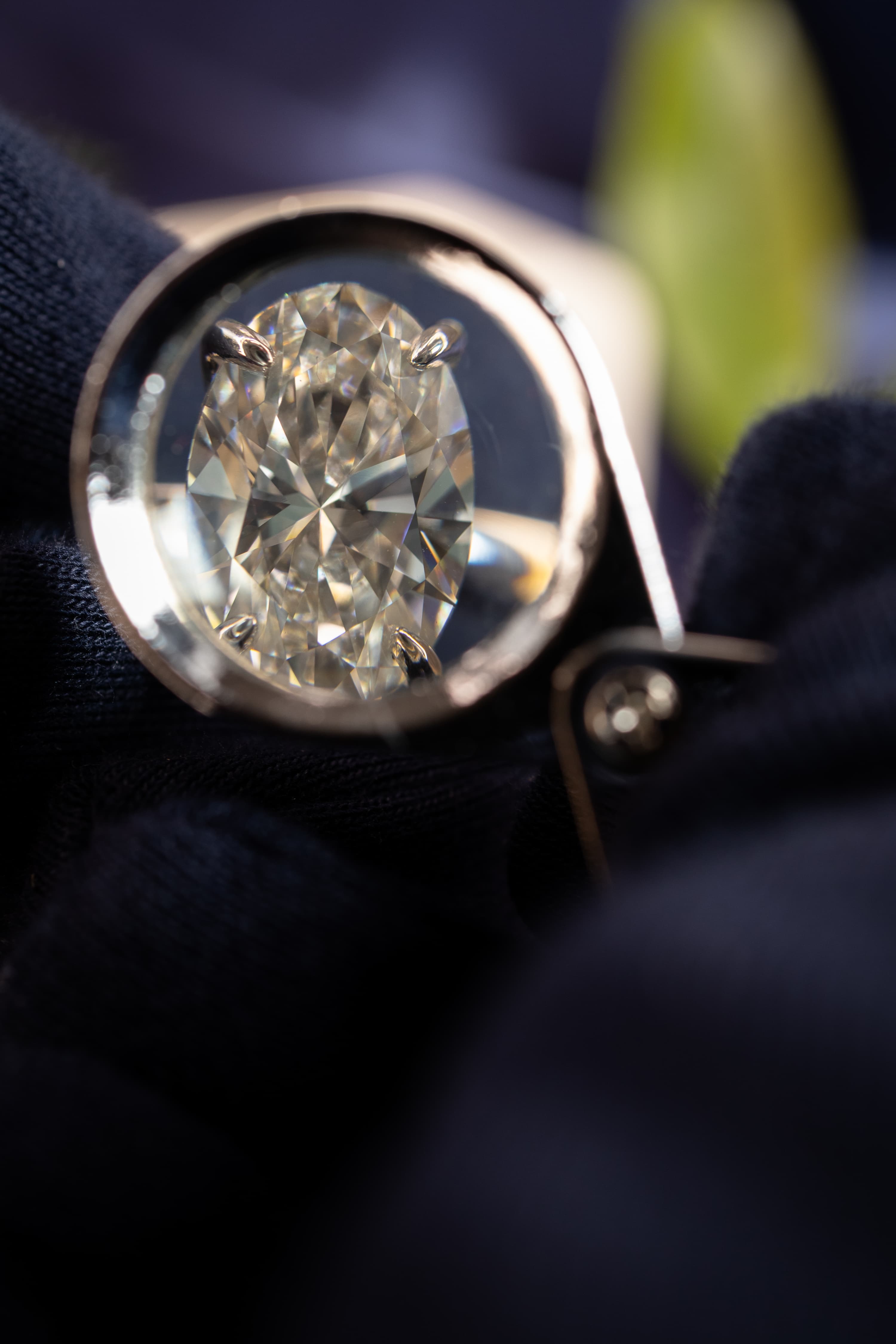
The most important point first: a lab-grown diamond is a diamond. It is the same material as a mined diamond — pure crystallised carbon — so it shares the same 10 on the Mohs hardness scale, the same refractive sparkle, and the same durability. A qualified gemmologist cannot tell it apart from a mined stone by eye; only specialised lab equipment (or the report and the laser inscription on the girdle) reveals its origin.
That is completely different from a simulant. Moissanite (silicon carbide) and cubic zirconia (zirconium oxide) are separate minerals that merely look diamond-like. They are cheaper look-alikes with different optical and thermal signatures and lower durability — not diamonds at all. If a stone is described as "real" or "genuine," confirm it is lab-grown or mined diamond material, not a simulant. Conflating the two is the single most common mistake first-time buyers make.
| Property | Diamond (lab-grown or mined) | Simulant (moissanite / CZ) |
|---|---|---|
| What it is | Crystallised carbon | A different mineral entirely |
| Hardness (Mohs) | 10 — the hardest | ~9.25 moissanite; ~8 CZ |
| Sparkle | Diamond fire and brilliance | Extra rainbow flash (moissanite); dulls with wear (CZ) |
| Sold as a diamond? | Yes | No — a look-alike only |
How lab-grown diamonds are made
Both methods start with a tiny diamond seed and build a crystal atom by atom. The two you will see named on certificates are:
- HPHT (High Pressure High Temperature). The seed is placed in a press and subjected to extreme pressure and heat that replicate the conditions under which natural diamonds form.
- CVD (Chemical Vapour Deposition). A seed plate sits in a vacuum chamber, a carbon-rich gas is ionised into plasma, and carbon atoms settle onto the seed layer by layer. CVD is now the dominant method for gem-quality stones.
The treatment detail worth knowing: many CVD stones are HPHT-annealed after growth to improve or neutralise colour (removing a faint brownish tint). This is a legitimate, industry-accepted practice — the ethical issue is non-disclosure, not the treatment itself. It must appear in the comments section of the report, either as a treatment note or as "as grown, no indication of post-growth treatment." An "as grown" stone is generally seen as more straightforward for appraisal and resale, so always check that line before you buy.
Reading the certificate — what changed in October 2025
This is the section most guides get wrong, because the rules shifted recently. From 1 October 2025, GIA stopped issuing a specific colour and clarity grade for lab-grown diamonds. Instead of the familiar D-Z colour scale and numeric clarity grades, a GIA lab-grown report now uses two descriptive tiers — Premium (D colour, VVS or better, top polish, symmetry and cut) and Standard (E-J colour, VS clarity, very good polish, symmetry and cut). Stones below Standard receive no grade at all. GIA's reasoning is that over 95% of lab-grown production now clusters in a narrow quality band, so natural-diamond nomenclature no longer differentiates meaningfully.
The practical consequence: "GIA certified" no longer means the same thing for a lab-grown diamond as it does for a mined one. If you want to compare two lab-grown stones on exact colour and clarity — the way you would for a mined diamond — you need an IGI report (or GCAL), not a post-October-2025 GIA one. IGI has kept full individual 4Cs grading and remains the dominant certifier by volume for lab-grown, which makes it the practical reference in 2026.
| Report | How a lab-grown diamond is graded in 2026 |
|---|---|
| IGI Lab Grown Diamond Report | Full individual 4Cs — specific D-Z colour, specific clarity grade, cut, polish, symmetry, growth method and a clarity plot |
| GIA (from 1 Oct 2025) | Two tiers only — Premium or Standard; no specific D-Z colour or numeric clarity; below Standard, no grade |
| GCAL | Full specific grading; a smaller alternative certifier |
Because grading is what lets you understand what you are paying for, it is worth reading our 4Cs of diamonds guide alongside this one, and our deeper explainer on diamond certificates for Australian buyers. Every diamond we supply is independently certified — primarily IGI, and also GIA and GCAL.
What lab-grown diamonds cost in 2026
Prices have fallen dramatically — but that story is largely over. Lab-grown diamond prices per carat dropped roughly 80% from their 2020 peaks, with the steepest declines between 2020 and 2024. The 2026 signal, though, is stabilisation rather than continued freefall: recent quarters show the smallest declines in years, and wholesale prices for premium certified stones now sit close to production cost — effectively a floor. Most analysts do not expect a return to 2020 price levels, in either direction.
The buyer takeaway is important: this is a stable, mature market, not a "wait and prices will keep crashing" situation. Below are illustrative Australian retail figures (GST-inclusive) for a well-cut stone — treat them as ballparks, not quotes.
| Centre stone | Typical quality | Approx AU retail |
|---|---|---|
| 1 carat | G-H colour, VS clarity (value sweet spot) | ~A$700-1,500 |
| 1 carat | D-F colour, VVS (premium) | ~A$2,000-2,500 |
| 3 carat | Varies by grade | ~A$3,500-9,500 |
As a rule of thumb, lab-grown sits at roughly 15-25% of the natural-diamond price for like-for-like quality. That is exactly why so many couples size up — see why couples are choosing bigger lab-grown centre stones for the trade-offs. One genuinely useful nice-to-know: the best value sits around F-G colour and VS2-SI1 clarity. Pushing up to D colour and VVS clarity delivers little visible difference to the naked eye but a real jump in price. For the full Australian market picture, our 2025-2026 Australian lab-grown guide goes deeper.
Resale and how to think about value
Be clear-eyed here. A lab-grown diamond typically resells for only about 10-30% of its original retail price — sometimes up to 40% for premium certified stones — versus roughly 30-60% commonly cited for mined diamonds. The gap is structural, not a knock on quality: lab supply is not scarcity-constrained, and new-production prices keep easing, which continually undercuts secondary-market value for existing stones.
The right frame is the same one that applies to almost every engagement-ring diamond, mined or lab: it is a keepsake, not an investment. Buy it for how it looks and what it means, not as a store of value. For insurance, have it valued at replacement or purchase cost — not resale value — so a claim actually replaces the ring.
The ethical and environmental picture — honestly
Lab-grown has a genuinely favourable story, but it is nuanced rather than a clean "lab equals green" claim. On the positive side, it avoids mining-related land disturbance and the conflict-diamond and human-rights risks tied to some mined supply chains, and it offers a traceable, single-origin provenance.
The honest caveat: growing diamonds is energy-intensive, and the real carbon footprint depends heavily on the facility's power source. Cited figures range widely — from around 5kg of CO2 per carat on renewable grids to roughly 40kg on coal-heavy grids (much production is in China and India), against a commonly quoted 100kg-plus for mined diamonds. These come from industry and advocacy sources on both sides of the debate, so treat them as illustrative ranges, not audited fact, and be wary of any single "settled" number. A third option worth knowing about is recycled or reclaimed mined diamonds. If ethics is your priority, our ethical and sustainable engagement ring checklist walks through the questions to ask.
On disclosure: there is no Australia-specific regulation for lab-grown labelling. It falls under general Australian Consumer Law (the misleading and deceptive conduct provisions), and reputable jewellers follow the international convention of stating "lab-grown" or "laboratory-created" clearly, immediately before the word "diamond," along with the growth method.
Why couples choose lab-grown
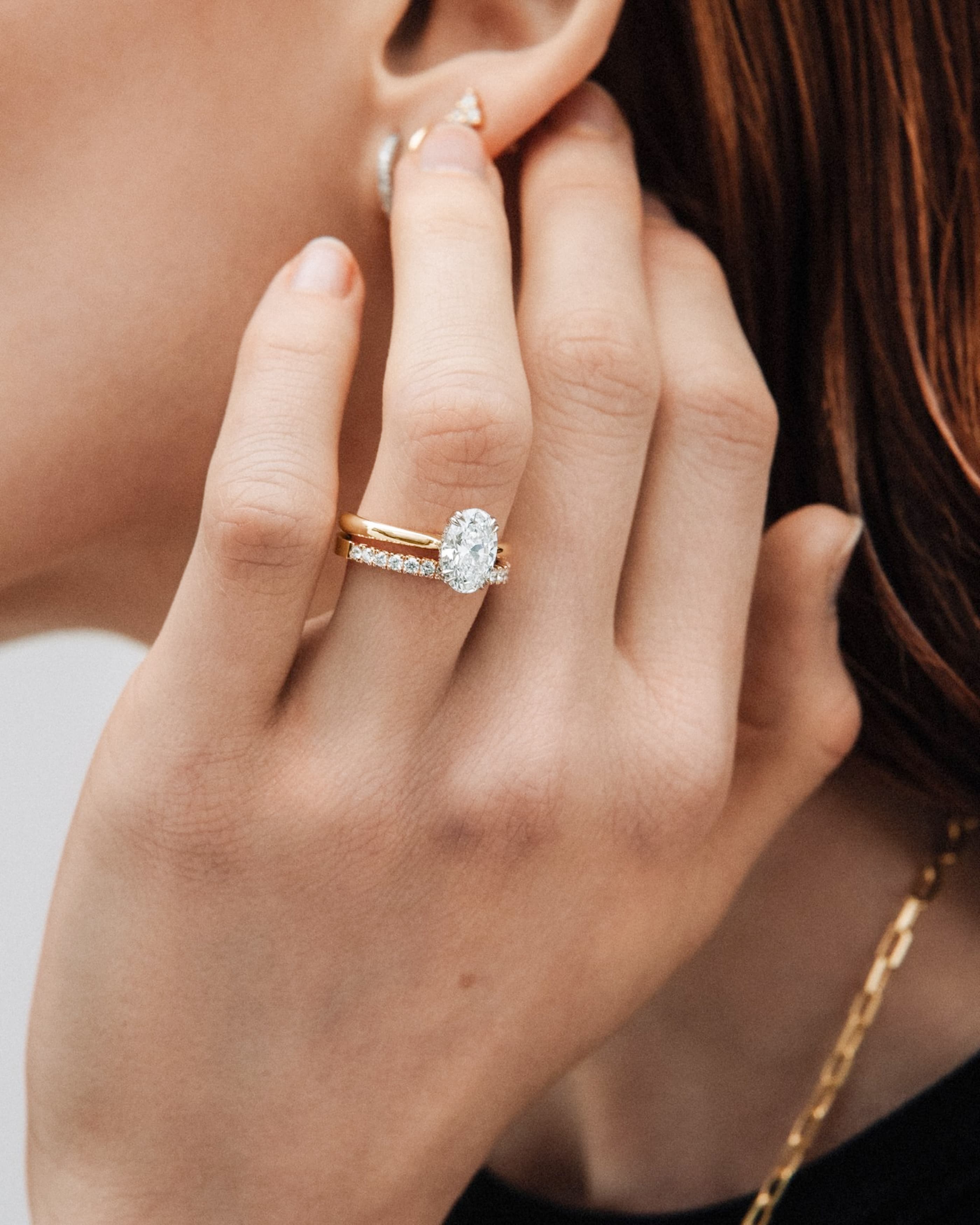
The appeal is straightforward: the same real-diamond experience — same hardness, same brilliance — at a fraction of the price, which means a materially larger stone or higher colour and clarity for the same budget. Add a mining-free, traceable origin, and for many couples the decision makes itself. Natural still makes sense if the rarity and billions-of-years origin story matter to you personally; it is an informed choice, not a right-or-wrong one.
Whichever you choose, the setting matters just as much as the stone. Our gold versus platinum guide helps with the metal, and if you want a fully custom piece, our bespoke design process takes you from sketch to finished ring in our Australian workshop, backed by a lifetime warranty and a complimentary resize within 12 months.
Common questions
Are lab-grown diamonds real diamonds?
Yes. They are chemically, physically and optically identical to mined diamonds — the same crystallised carbon, the same hardness and sparkle. The only difference is that they were grown in a lab rather than formed underground.
Do lab-grown diamonds pass a diamond tester?
Yes, because they are carbon, they test as diamond. Cubic zirconia fails a diamond tester, and moissanite gives a separate reading on modern combination testers — which is one way simulants are caught out.
Is IGI or GIA better for a lab-grown diamond?
For an exact, comparable colour and clarity grade in 2026, choose IGI (or GCAL). Since 1 October 2025, GIA only assigns broad "Premium" or "Standard" tiers to lab-grown diamonds rather than specific 4Cs.
Will my lab-grown diamond lose value?
Treat it as a keepsake, not an investment. Resale is typically around 10-30% of retail because new-production prices keep easing, so insure it at replacement cost rather than resale value.
Are lab-grown diamonds better for the environment?
They avoid mining and offer a traceable origin, which is directionally favourable. But the carbon footprint depends heavily on the growing facility's power source, so it is not a clean-cut "greener" claim.
Can you tell a lab-grown diamond apart by eye?
No. To the naked eye — even a jeweller's — a lab-grown and a mined diamond are indistinguishable. Only specialised lab equipment, the certificate, or the laser inscription on the girdle reveals which is which.
Ready to choose your stone? You can browse our engagement rings, have our Stone Concierge source a diamond to your exact spec, or book a consultation with our Melbourne team to compare stones and certificates side by side.